Parshivlok had always known the touch of air.
Gentle winds had moved across its lands like careful hands, lifting leaves, carrying scents, whispering stories from one corner of the world to another. The wind had always been a friend.
Until one day, it forgot how to be gentle.

The sky darkened without clouds, and the air began to move without pause. Not fast, not wild, but endlessly, as if the planet itself was being pushed by invisible palms. The winds circled Parshivlok again and again, growing heavier with every turn, pressing against mountains, pulling at oceans, bending trees until even their roots felt unsure.
The winds circled Parshivlok again and again, growing heavier with every turn, pressing against mountains, pulling at oceans, bending trees until even their roots felt unsure.
Slowly, almost shyly at first, Parshivlok began to drift..
Those who stood guard upon the land felt it beneath their feet. The ground no longer rested where it should. The horizon leaned. The stars trembled.
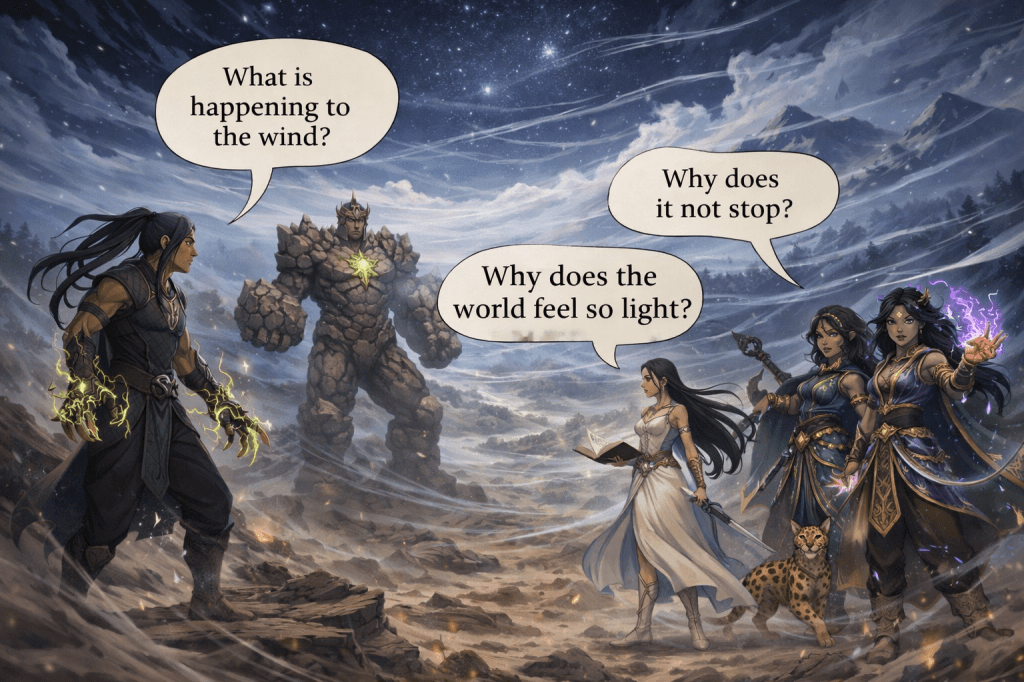
Confusion spread, soft at first, then urgent.
“What is happening to the wind?”
“Why does it not stop?”
“Why does the world feel so light?”
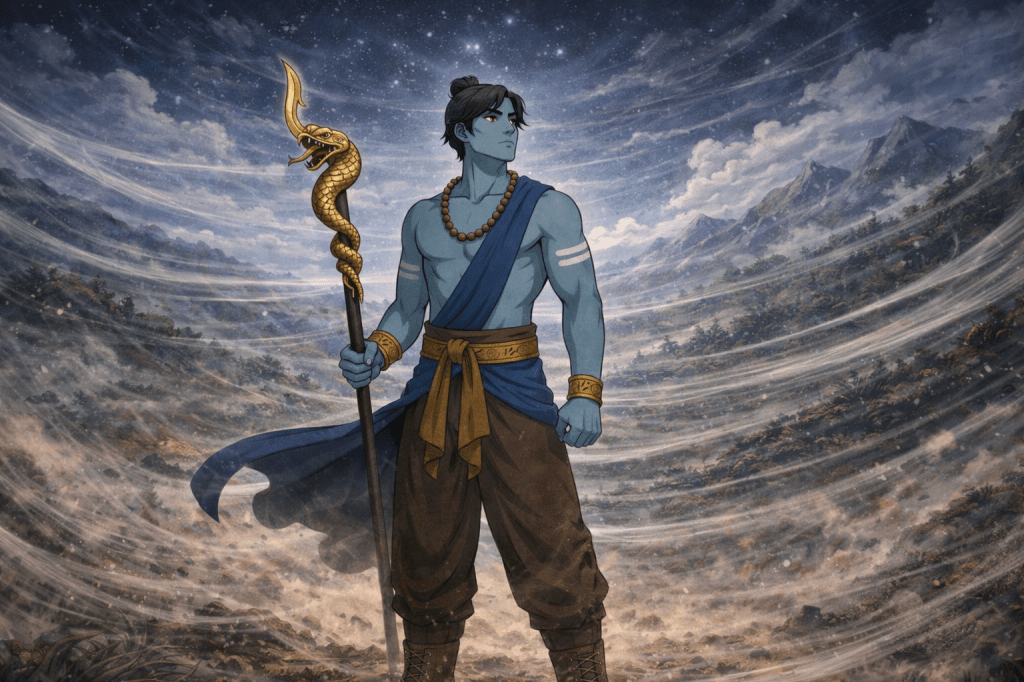
Only Shevak remained unmoved. He stood steady while the air rushed past him, his robes untouched, his breath calm, his gaze lifted not in fear but in understanding. He knew this was not anger. This was imbalance.
Shevak closed his eyes, and in that quiet moment, he reached not outward, but inward, toward the source of all movement.
The Realm of Wind — Vaayun answered.
The storm folded into itself, and within Shevak’s open palm gathered a living breath of air, clear and bright, restless yet listening. It shimmered softly, like wind given a heart.
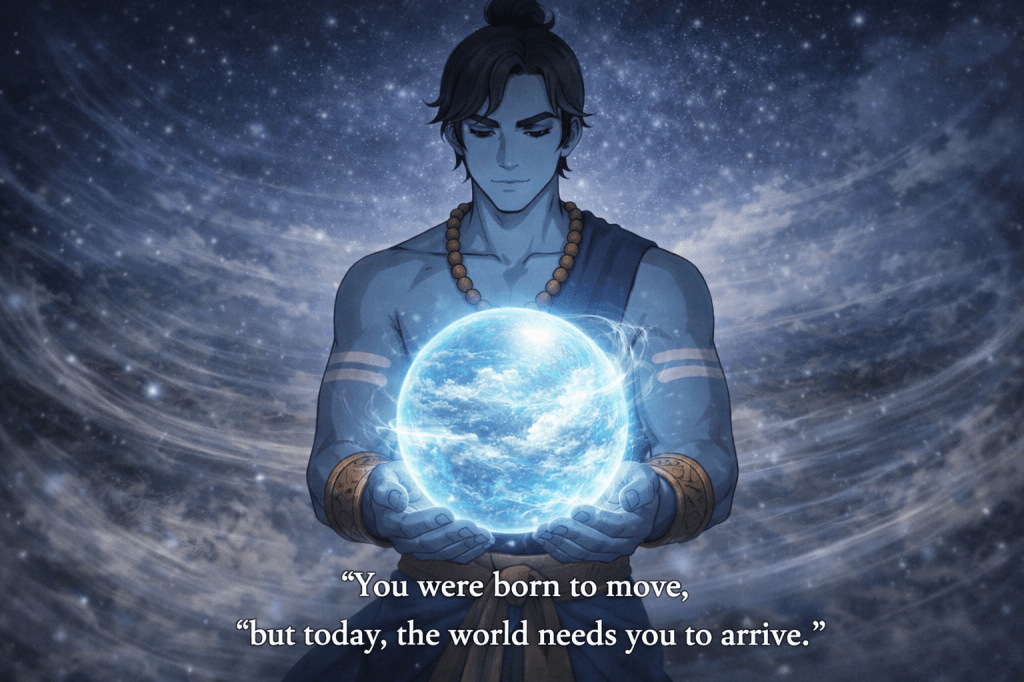
Shevak spoke, his voice slow and warm, the way one speaks to something powerful that has lost its way.
“You were born to move,” “but today, the world needs you to arrive.”
From Shevak flowed a gentle light, steady and patient. It did not command. It guided. The light entered Vaayun, and together they rose into the sky, cutting through the storm as if it were cloth.
The heavens opened.

From above descended Vayuputra.
He did not fall. He did not rush. He came down as the wind chooses to come down—certain, effortless, free.
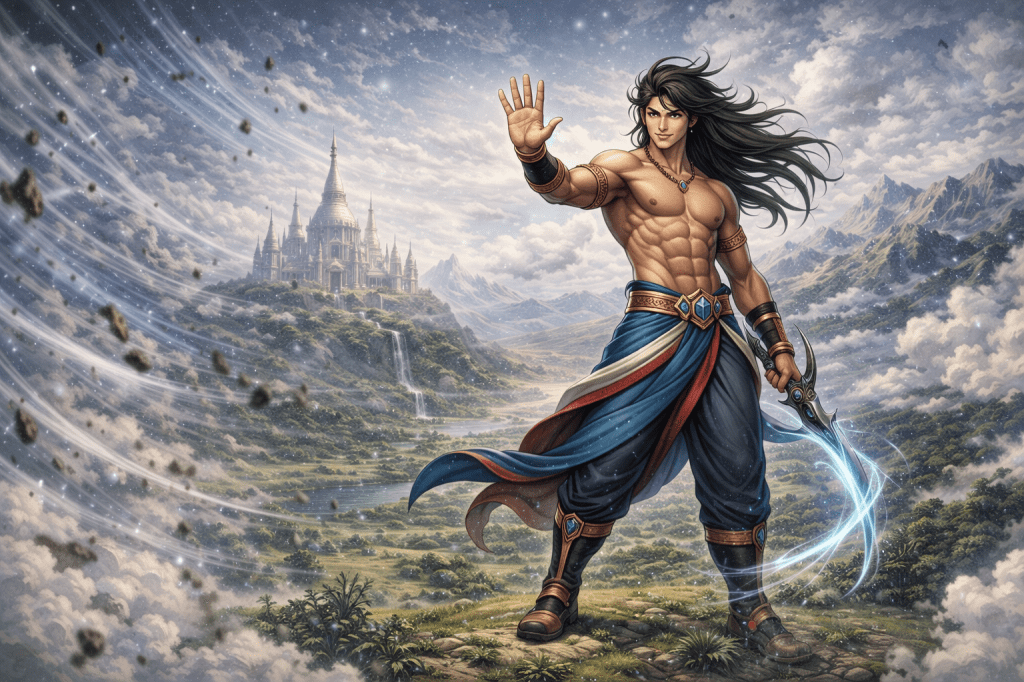
His form was strong yet light, shaped not by weight but by motion. Long dark hair flowed behind him, lifted constantly by the air that loved him. Cloth wrapped around his waist and legs, moving as if alive, never clinging, never still. His body carried strength without heaviness, and his face held a calm joy, like someone who knew both speed and stillness equally well.
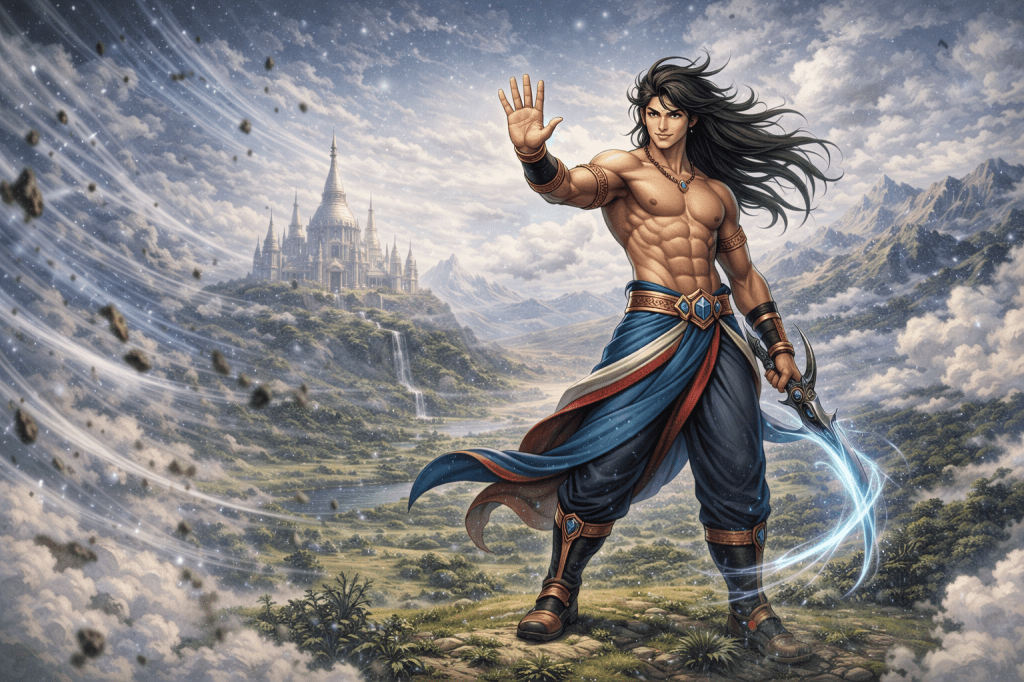
Where he stepped, the wind followed. Vayuputra placed one foot upon Parshivlok, and the land did not shake. He lifted a single hand with his palm open.
And the storm stopped. Not slowly. Not reluctantly.
The wind simply remembered itself
The air softened. The pressure lifted. Trees straightened, rivers settled back into their paths, and Parshivlok gently returned to its place in the sky, as if it had never moved at all. Vayuputra stood quietly, feeling the breath of the world beneath him, until everything was calm once more.
Shevak opened his eyes. For the first time since the storm began, there was peace.
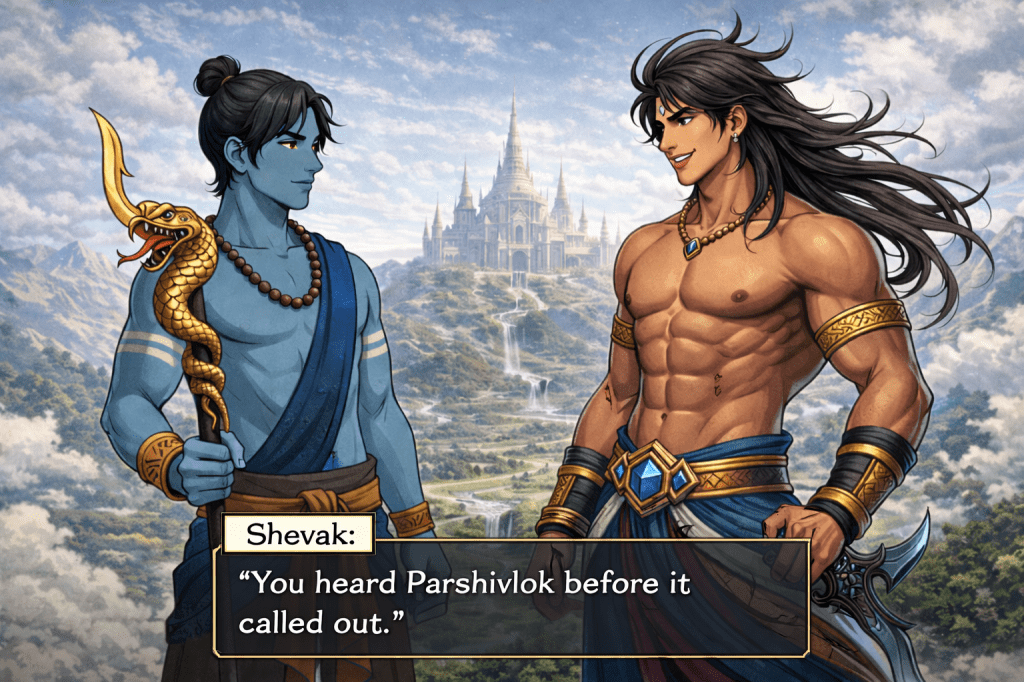
Shevak: “You heard Parshivlok before it called out.” Vayuputra smiled, warm and easy, like the breeze that follows rain.
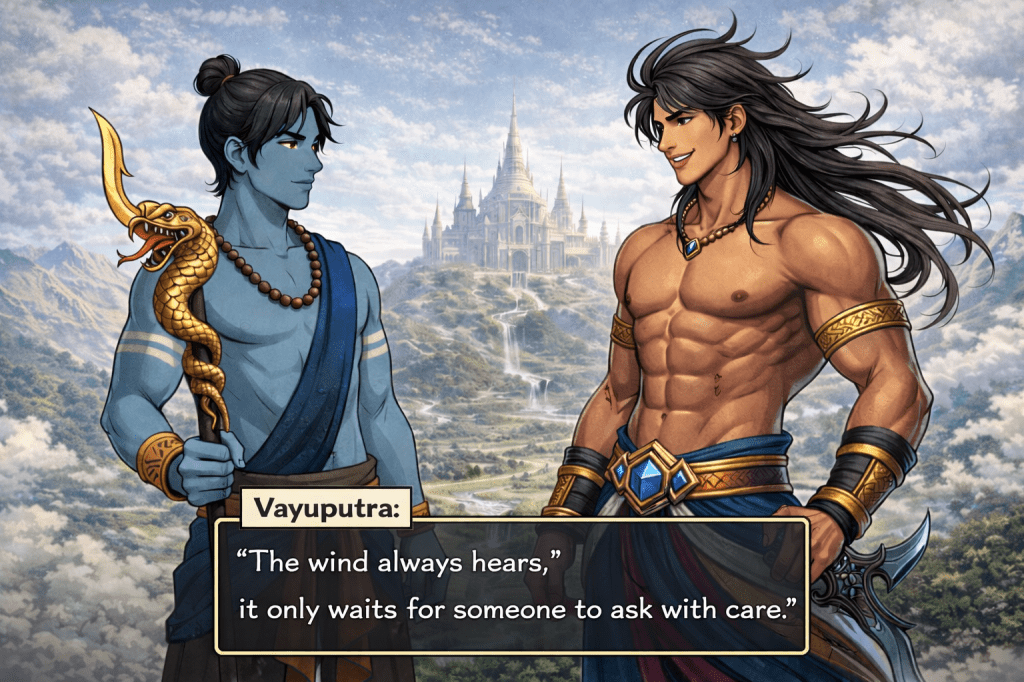
Vayuputra: “The wind always hears,” “it only waits for someone to ask with care.”
He looked around the land, taking it in, not as a ruler, not as a visitor, but as someone who already belonged.
Shevak stepped forward, his presence quiet but vast.
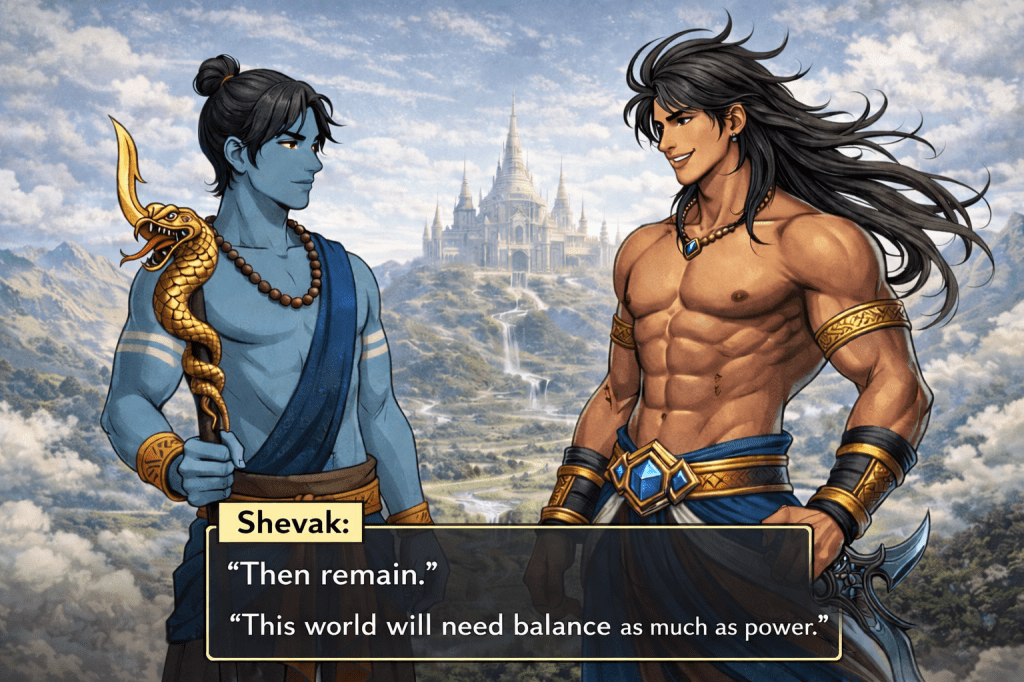
Shevak: “Then remain. This world will need balance as much as power.”
Vayuputra turned fully toward Shevak.
And then, with respect as deep as the sky and humility as natural as breath, he bowed.
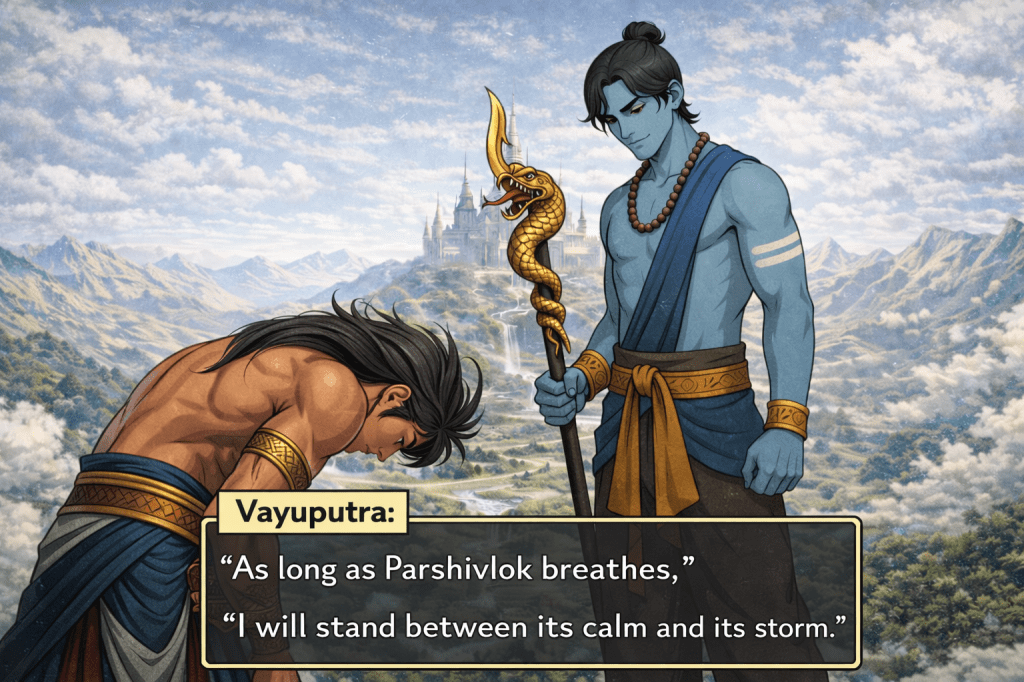
Not in submission. In gratitude.
Vayuputra: “As long as Parshivlok breathes,”
“I will stand between its calm and its storm.”
The wind stirred once more—not wild, not loud—but playful and light, running across the land like laughter.
Parshivlok exhaled.
As it knew that the wind now had a guardian.
 parshivloktales.com
Leave a comment